
Types of Courses
From windswept Scottish links to mountain courses at altitude, from desert oases to tropical resort holes — golf is played on more types of land than almost any other sport. Here is a guide to the six main course styles, how each one plays and what golf travellers and club players can learn from them.
Why course type matters more than course length
Two courses of identical length and par can play completely differently depending on the land beneath them. A firm 6,800-yard links can defend itself against the best players in the world; a soft 7,400-yard parkland can give up low scores all day. Wind, rainfall, soil, grass species and elevation all shape the experience as much as the architect’s routing does.
Most golfers grow up playing one or two course types and never quite adapt when they travel. Understanding the six main styles — what they reward, what punishes you on them, and what shots you need to bring — is one of the fastest ways to play smarter golf on unfamiliar turf.
Links
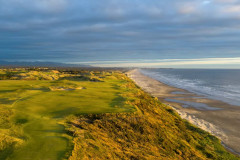
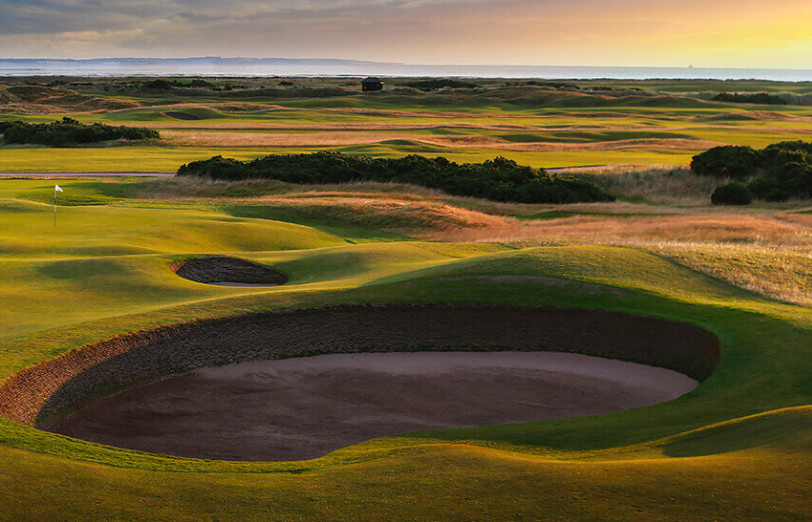
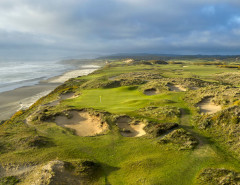
The original form of golf, played for centuries along the sandy coasts of Scotland, Ireland and northern England. The word “links” describes the strip of land that links the sea to the farmland behind — too poor for crops but perfect for the game. The terrain is naturally treeless, shaped by wind, rain and grazing sheep, with firm fast-running turf and deep revetted pot bunkers.
How it plays
The wind dictates everything. You learn to flight the ball low underneath it, use the ground to roll approach shots up to the green and play bump-and-runs from 40 yards out. Pot bunkers are penal — sometimes a sideways escape is the best you can do. Greens are often firm and contoured, so judgment of pace matters more than aerial precision. No two rounds play the same because the wind is never the same twice.
Famous example
The Old Course at St Andrews in Scotland is the spiritual home of the game and the world’s most famous links. Royal County Down in Northern Ireland, Royal Birkdale and Carnoustie are other classic examples, all on regular rotation for The Open Championship.
Parkland
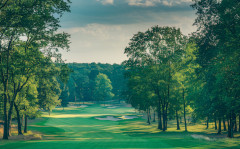
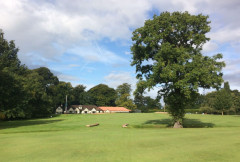

Tree-lined inland courses set in landscaped grounds. Mature oaks, pines, beech and lime trees frame the fairways and define the corridors of play. Parkland is the most common style of course across continental Europe, the United States, Australia and Asia — anywhere with reliable rainfall, deep soils and the resources to maintain lush turf year-round.
How it plays
Aerial golf is rewarded. Soft turf grips the ball well, so approach shots stop on the green rather than running out the back. Trees punish wayward drives — you may need to chip out sideways before you can have another go at the hole. Fairways form clear corridors with target lines defined by the canopy. Most modern tour stops outside the British Isles are parkland courses.
Famous example
Augusta National in Georgia is the world’s most famous parkland course, hosting the Masters every April. Wentworth West in England, Crooked Stick in Indiana and Royal Melbourne (composite) in Australia are other classic examples.
Heathland
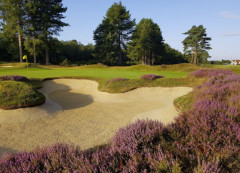
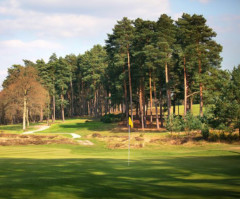
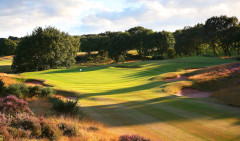
A distinctly British and European hybrid. Heathland courses sit on free-draining sandy inland soils — most famously across the Berkshire and Surrey “Sandbelt” south-west of London — and are framed by heather, gorse, bracken, Scots pine and silver birch. They marry the firm running turf of a links with the defined holes of parkland, and many of the best-loved courses in England are heathland.
How it plays
A blend of links character and parkland definition. The fairways run firm in summer, encouraging a ground game, but trees and heather frame each hole the way they would on parkland. Heather is the real defender — find it off the tee and you may not get back to the fairway in one shot. Strategic placement matters: classic heathland design often features short par-4s with hazards in the driving zone, forcing a choice between aggression and safety.
Famous example
Sunningdale Old Course is the archetype. Walton Heath, St George’s Hill, Wentworth East and Woodhall Spa are other classics, and Pine Valley in New Jersey is the most famous heathland-influenced course in the United States.
Desert Courses
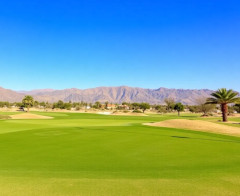
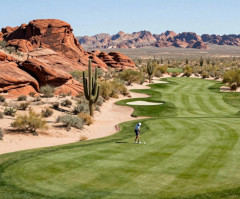
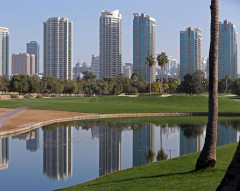
A twentieth-century invention. Desert courses transform arid landscapes — Arizona, Nevada, the United Arab Emirates, parts of South Africa and the Spanish Costa Blanca — into lush green oases. Only the fairways and greens are irrigated; everything beyond is sand, scrub, rock and cactus. The contrast between bright green turf and warm desert tones makes them some of the most photogenic courses on earth.
How it plays
Forced carries are everywhere — from tees, over scrub, across washes. Miss a fairway and you may be hitting from hardpan or worse, unable to play out at all. Dry desert air is thinner, so the ball flies five to ten percent further than at sea level. Daytime heat in summer can be punishing, and wind funnels through canyons in unpredictable directions. Precise yardages matter more here than on almost any other course type.
Famous example
TPC Scottsdale in Arizona hosts the famously raucous Phoenix Open. Emirates Golf Club’s Majlis course in Dubai, We-Ko-Pa Saguaro near Phoenix and Troon North are other well-known desert venues.
Resort / Tropical Courses


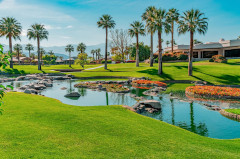
Courses built for holidaymakers and scenery — usually on coastlines, peninsulas or volcanic islands in the Caribbean, Hawaii, Mauritius, Thailand, Florida and Mexico. Palm trees, lakes, ocean carries and bright Bermuda or Paspalum turf are common features. Resort courses are designed to look stunning in photographs and to play kindly to handicap golfers who only get a few rounds a year.
How it plays
Generally forgiving. Fairways are wide, greens are large, and architects build in bail-out areas to keep visiting golfers in play. Water hazards add visual drama and pressure but rarely sit directly across the line of play for an average drive. Bermuda greens have grain, which affects the speed and break of putts. Heat and humidity can drain energy over 18 holes, and most resort rounds include a cart.
Famous example
Pebble Beach in California is the world’s most famous resort course — coastal, dramatic and open to public play. Mauna Kea and Mauna Lani in Hawaii, Tryall in Jamaica and Belle Mare Plage on Mauritius are other classic destination courses.
Mountain / Alpine Courses
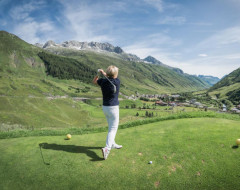
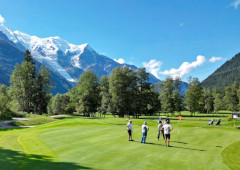
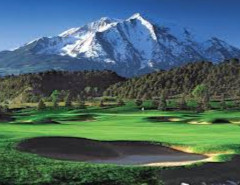
Courses carved into mountain and high country, often at significant altitude. The classic settings are the Swiss Alps, the Colorado Rockies, the Canadian Rockies, the Italian Dolomites, the Spanish Pyrenees and the volcanic highlands of Japan. The combination of dramatic scenery and thin clean air makes mountain golf an unforgettable experience.
How it plays
Elevation changes within a single hole are dramatic. An uphill par-3 might need two extra clubs; a downhill par-4 might play a full club shorter than its yardage. Thin air at altitude means the ball flies further — typically seven to ten percent more carry at 1,500 metres. Wind funnels through valleys in unpredictable directions. Almost every shot is from or to a sloping lie, which makes balance and tempo more important than club-head speed.
Famous example
Crans-sur-Sierre in Switzerland hosts the Omega European Masters every year, at over 1,500 metres above sea level. Banff Springs in the Canadian Rockies, Castle Pines in Colorado and the Furry Creek course in British Columbia are other dramatic mountain courses.
Quick comparison
How the six course types line up at a glance. Swipe horizontally on a phone to see all the columns.
| Course type | Key feature | Main challenge | Style of play |
|---|---|---|---|
| Links | Coastal, treeless, firm sandy turf | Wind, pot bunkers, firm greens | Low ball flight, ground game, creativity |
| Parkland | Mature trees, lush soft turf | Tight tree-lined corridors | Aerial golf, target approach shots |
| Heathland | Sandy soil with heather, gorse, pine | Penal heather rough, strategic carries | Mixed flight, smart placement off tee |
| Desert | Oasis fairways cut into desert | Forced carries, no rough beyond fairway | Precise yardages, conservative misses |
| Resort / Tropical | Scenic coastal or palm-lined setting | Water hazards, heat, Bermuda grain | Aerial, generous, holiday-pace |
| Mountain / Alpine | Significant elevation, altitude | Yardage adjustments, slope, thin air | Adapt for altitude and lie on every shot |
What every golfer can take from each course type
Most club players will only ever play one or two course styles. But every style teaches a lesson that travels well back to your home course.
- From links — learn the ground game. A bump-and-run from 30 yards is more reliable than a flop shot under pressure, even on lush turf.
- From parkland — commit to the line. Defined corridors reward decisive shots. Indecisive swings end up in trees.
- From heathland — choose your spot off the tee. The best score often comes from laying back to a comfortable yardage, not bombing it.
- From desert — know your carry numbers. Most amateurs assume they hit it ten yards further than they do. The desert exposes that fast.
- From resort and tropical — manage your energy. Hydration and pace decide the back nine more often than swing technique.
- From mountain — adjust for what your eyes can’t see. Elevation and altitude both lie to you. Trust the yardage book and add or subtract clubs.

Play any course with Shark Club
Whether you are tackling a windswept links, a tree-lined parkland or a forced carry over desert, accurate distances and good decision-making are what lower scores. Shark Club gives you GPS distances, scorecards, Stableford scoring and handicap tracking on iPhone, Apple Watch, Android and Wear OS.
Want more reading? Try The Four Golf Majors Compared or our Golf Quotes from Great Players page. For help using the app, visit the Shark Club Support & FAQ.
Share this article
Enjoyed the read? Pass it on to your golf friends.