
The 14 Clubs in Your Bag
From driver to lob wedge — every club in a 14-club set, how far each one should fly, when to use it, and which clubs are quietly disappearing from modern golf bags. Plus the cheeky 15th club.
Why 14 clubs, and who hits how far?
Both the R&A and the USGA cap a player at 14 clubs in the bag. Carry a 15th and you’ll get a two-stroke penalty per hole on the first two holes where the breach is discovered — up to a maximum of four. The 14-club limit forces every player to choose: more long-game weapons or more scoring options around the green.
Distance numbers in this article are honest ranges, not aspirational ones. We’ve broken them into three skill bands so you can find the row that matches your game.
Mid-handicap amateur
10–36 handicap. The average club golfer — plays once or twice a week, breaks 100 most rounds, breaks 90 on a good one.
Single-figure amateur
0–9 handicap. The strong club player — practices regularly, breaks 80, can handle a championship venue.
Tour professional
PGA, DP World, LIV or Champions Tour. Practice and competition daily — the top fraction of one percent of golfers.
Your own distances will vary with swing speed, ball type, weather, elevation and how firm the fairways are. Treat these as carry-plus-roll on a normal day at sea level, no wind, decent lie.
Driver
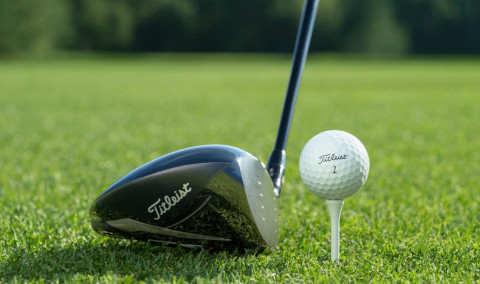
The biggest club in the bag and the one most golfers obsess over. Modern drivers feature 460cc titanium heads, adjustable lofts and weight ports, and are built for one job: maximum carry off the tee.
When to use: Long par-4 and par-5 tee shots where fairway width allows. Leave it in the bag on tight tree-lined holes where a 3-wood off the tee gives you a bigger margin for error.
Modern context: Universal — every player carries one. Tour swing speeds average around 116 mph; mid-handicap amateurs typically swing 85–95 mph.
Fairway Woods (3-wood & 5-wood)
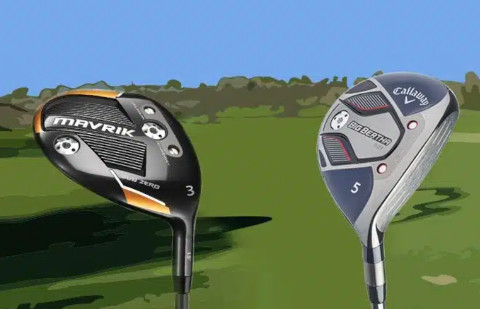
Smaller-headed cousins of the driver — designed to be played both off the tee (when you want more control) and off the fairway (for long par-5 second shots).
3-wood
When to use: Tee shots on tight par-4s, second shots on reachable par-5s. The hardest club to hit purely off the deck — many amateurs find a 5-wood or 3-hybrid easier.
5-wood
When to use: Long approach shots from the fairway, par-5 layups, soft landings on receptive greens. The 7-wood is also making a comeback on tour as a softer alternative to long irons.
Long Irons — 3, 4 and 5
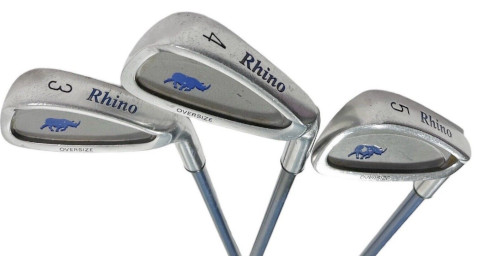
Long irons used to be the standard for approach shots between 180 and 220 yards. Modern technology and the rise of hybrids has changed all that. Today, the 3-iron is almost extinct outside of professional bags, the 4-iron is fading fast, and the 5-iron is still hanging on.
3-iron
Modern context: Largely obsolete for amateurs — replaced by a 3- or 4-hybrid. Tour pros occasionally carry a 3-iron as a “driving iron” for windy links conditions.
4-iron
Modern context: On the way out for most amateurs — usually replaced by a 4-hybrid. Still common in good amateur and pro bags.
5-iron
Modern context: Still common across all skill levels. Many players now carry a 5-hybrid instead, especially if they’re playing softer parkland courses.
Hybrids
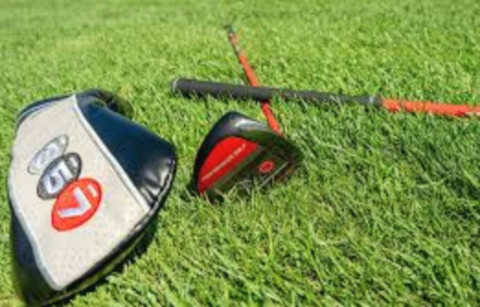
Half iron, half fairway wood — and the single biggest equipment change of the last 20 years. Hybrids launch the ball higher, are easier to hit off the deck and from the rough, and have quietly killed off long irons in most golf bags. Numbered by the iron they replace (a 3-hybrid replaces a 3-iron, a 4-hybrid replaces a 4-iron, and so on).
3-hybrid
4-hybrid
When to use: Long approaches, par-3s, recovery shots from light rough — anywhere a long iron used to live. Easier to hit from poor lies than a fairway wood, easier to launch than a long iron.
Mid Irons — 6 and 7
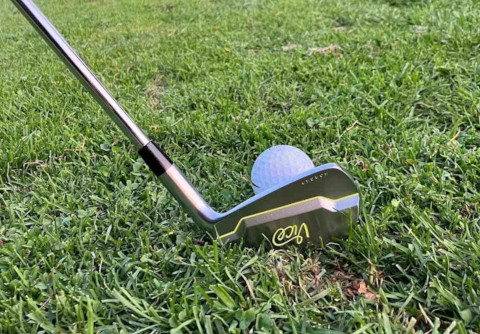
The 6- and 7-irons are the most-hit clubs in many rounds. They reach the green from a typical par-3 or a comfortable par-4 second shot, and they’re forgiving enough for amateurs while still precise enough for pros.
6-iron
7-iron
When to use: The 7-iron is the go-to club for many amateurs from 150 yards out. Modern lofted irons have made distance figures creep up — what used to be a 7-iron loft (around 38°) is often a 6-iron today.
Short Irons — 8 and 9
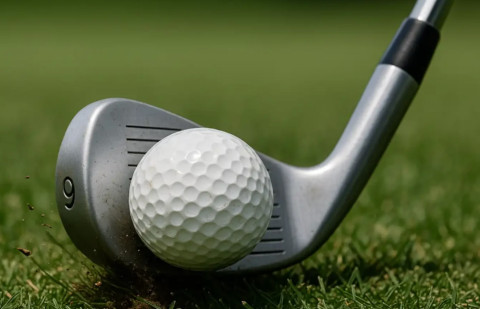
Throw-a-dart territory. Short irons stop quickly on the green and let you attack pin positions that would be reckless with a longer club. The shorter shaft also makes them the most accurate full-swing clubs in the bag.
8-iron
9-iron
When to use: Approach shots inside 150 yards. High launch, soft landing, plenty of backspin — perfect for tight pin positions or holes where you need the ball to stop.
Wedges — PW, GW, SW, LW
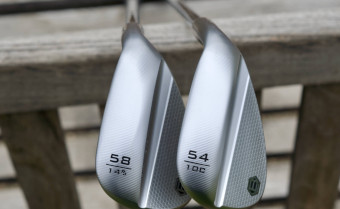
Wedges decide your handicap. Tour pros carry four; many amateurs carry three. Loft spacing matters more than the labels on the sole — most players want even gaps of 4° to 6° between wedges.
Pitching wedge (PW)
Gap wedge (GW / AW)
Sand wedge (SW)
Lob wedge (LW)
When to use: The PW is your full-swing approach club inside 130 yards. The GW fills the gap to the SW. The SW is for bunkers and short pitches with bite. The LW is for high, soft flops, deep rough and short-sided recoveries.
Putter
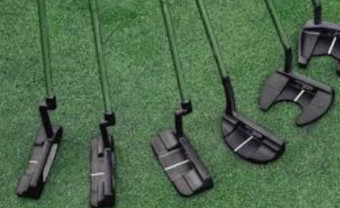
The most-used club in any round of golf. A scratch player typically hits 28–32 putts per round; a mid-handicapper closer to 36–40. That’s roughly 40% of all strokes coming from one club. Yet it’s the one most golfers spend the least time practising with.
Putter types: blade putters (compact, classic feel, demanding), mallet putters (larger head, more forgiving, easier alignment) and mid-mallets in between. Pick the head that frames the ball cleanly for your eye.
Length: 33–35 inches for standard putters. Belly and broomstick putters are restricted under modern rules — anchoring the club against the body has been illegal since 2016.
The single biggest scoring upgrade for most amateurs: two or three weeks of focused lag-putting practice from 30–40 feet. Cutting two three-putts a round saves four shots.
All 14 clubs at a glance
A quick reference of every club, loft, and realistic distance range. Numbers are flat lies, no wind, sea level, decent contact.
| Club | Loft | Amateur (10–36) | Single figure | Tour pro |
|---|---|---|---|---|
| Driver | 9–11° | 200–240 yd | 240–275 yd | 285–320 yd |
| 3-wood | 13–16° | 180–210 yd | 215–245 yd | 255–285 yd |
| 5-wood | 18° | 170–195 yd | 200–225 yd | 240–265 yd |
| 3-hybrid | 19° | 160–185 yd | 195–220 yd | 225–250 yd |
| 4-hybrid | 22° | 150–175 yd | 180–205 yd | 210–235 yd |
| 3-iron (rare) | 21° | 155–180 yd | 185–210 yd | 215–235 yd |
| 4-iron (fading) | 24° | 145–170 yd | 175–200 yd | 205–225 yd |
| 5-iron | 27° | 135–160 yd | 165–190 yd | 195–215 yd |
| 6-iron | 30° | 125–150 yd | 155–180 yd | 180–205 yd |
| 7-iron | 34° | 115–155 yd | 155–175 yd | 175–195 yd |
| 8-iron | 38° | 105–130 yd | 130–155 yd | 155–180 yd |
| 9-iron | 42° | 95–115 yd | 115–140 yd | 140–165 yd |
| Pitching wedge | 44–48° | 85–110 yd | 110–130 yd | 130–150 yd |
| Gap wedge | 50–52° | 70–90 yd | 90–115 yd | 110–135 yd |
| Sand wedge | 54–56° | 60–80 yd | 80–100 yd | 95–115 yd |
| Lob wedge | 58–60° | 45–70 yd | 70–95 yd | 85–110 yd |
| Putter | 3–4° | — | — | — |
A typical 14-club bag for an amateur: Driver, 3-wood, 5-wood, 4-hybrid, 5-iron, 6-iron, 7-iron, 8-iron, 9-iron, PW, GW, SW, LW, Putter. Swap a wood for a hybrid, or a wedge for a long iron, depending on your game and your courses.

The 15th Club — Shark Club Golf
Golfers have always argued that there’s a 15th club — the one that tells you which of the other 14 to hit. Yardage books, rangefinders, GPS watches, even your caddie. The right number in your head is the difference between a 7-iron and an 8-iron, between flag-high and short of the green.
That’s where Shark Club comes in. Accurate GPS distances for 42,000+ courses, full scorecards, Stableford scoring and handicap tracking — on iPhone, Apple Watch, Android and Wear OS. Pick a club with confidence, not guesswork.
Want more reading? Try The Four Golf Majors Compared, Types of Golf Courses Explained or Golf Quotes from Great Players. For help using the app, visit the Shark Club Support & FAQ.
Share this article
Know a golfer who’d argue with these numbers? Pass it on.