
All About Bunkers
Sand traps, pot bunkers, beach bunkers, cathedral pews — bunkers are the most photographed, most feared and most misunderstood hazards in golf. Here is everything you need to know: the main types, the most intimidating bunkers in major-championship history, the rules that catch players out, and the technique to escape every single time.
Why bunkers exist — and why they matter
Bunkers began as nothing more than sheltered hollows where sheep huddled out of the wind on the old Scottish links. Over time the grass wore away, the sand was exposed, and what started as an accident of nature became the defining hazard of the game. Today architects place bunkers deliberately — to frame a green, to punish a greedy line off the tee, or to make a golfer think twice before taking on a risky shot.
For the amateur golfer, a bunker is rarely the disaster it feels like. A good lie in a shallow greenside trap is often easier than the same shot from thick rough. The trouble is that most players never learn the technique, never read the rules properly, and panic the moment their ball trickles over the lip. This guide fixes all three.
Types of Bunkers



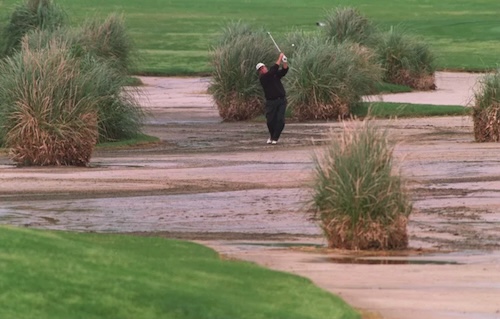
Not all sand is the same. The shot you play — and the trouble you are in — depends entirely on which kind of bunker your ball has found. These are the main types you will meet.
Greenside bunkers
The classic “sand trap” cut into the slopes around a green. They are usually short — you are rarely more than 30 yards from the flag — but the sand is soft, the faces are steep, and the goal is height and a soft landing rather than distance. This is the bunker shot most amateurs face, and the one worth practising the most.
Fairway bunkers
Placed in the landing zone off the tee or down the fairway, these punish a wayward drive. The priority here is clean contact and getting the ball back in play — picking the ball cleanly off the top of the sand with enough loft to clear the front lip, while accepting you may give up distance.
Pot bunkers
Small, deep and savage — the signature hazard of a true links course. Their walls are often built from stacked “revetted” turf and can be taller than the golfer. From a bad pot-bunker lie there is frequently only one sensible play: wedge out sideways or even backwards, and take your medicine.
Waste bunkers
Large, sprawling sandy areas — common on desert and modern resort courses — that are technically not maintained as hazards. Crucially, you are usually allowed to ground your club and take practice swings in a waste area, because under the Rules it is general ground rather than a bunker. Always check the local rules if you are unsure.
Beach & cross bunkers
Beach bunkers are the huge, shallow, scalloped sand sheets you see at courses like Whistling Straits, used as much for drama as for defence. Cross bunkers run diagonally across a fairway, forcing a decision on how much to bite off. Both are about strategy and intimidation as much as punishment.
Most Feared Famous major-championship bunkers
Some bunkers are so notorious they have names, reputations and a body count of broken scorecards behind them. Here is my personal ranking of the three most feared bunkers in major-championship golf — counted down to the worst place on earth to find your golf ball.
Church Pews

Sitting between the 3rd and 4th fairways at Oakmont Country Club near Pittsburgh, the Church Pews are unmistakable: a vast bunker broken up by a dozen long, raised ridges of rough grass that look exactly like the pews of a church. There is no good lie in here. You might draw a clean shot of sand, or you might be jammed against the front of a grassy ridge with no swing at all. Generations of U.S. Open contenders have seen their week end in those rows of sand and turf — it is as much a lottery as a hazard, which is what earns it a place on the list.
Hell Bunker

Guarding the 14th hole of the Old Course at St Andrews, Hell Bunker is enormous — roughly 10 feet deep and big enough to lose a foursome in. Its reputation is built on famous victims: in the 1995 Open, Jack Nicklaus took four shots to escape it and ran up a nine on his way out of the championship. Because it sits in the heart of the layup zone on a par 5, you cannot simply avoid it by playing safe — it forces a genuine decision, and a half-hearted shot is exactly what feeds it. Earning the name “Hell” on the home of golf is no small thing.
Road Hole Bunker

Top of my list, and not by a small margin. The Road Hole bunker on the 17th of the Old Course is tiny compared with Hell Bunker — but it is cut right into the left side of the green with a sheer, near-vertical revetted face, and the putting surface falls straight towards it. The cruelty is in the position: from the wrong spot you may have to play out sideways or even backwards, away from the flag, because the wall is simply too steep to clear toward the hole. Tommy Nakajima needed four attempts here in the 1978 Open, and the bunker has wrecked more 72nd-hole dreams than any other single patch of sand in the game. There is no worse place to be in a major.
Rules for Bunker Shots
Bunkers have their own set of rules, and getting them wrong is an easy way to add penalty strokes to a card that was already in trouble. Here are the ones that matter most for everyday play. (These follow the modern Rules of Golf; always defer to any local rules in force at your course.)
The basics — what you cannot do
- Do not ground your club in the sand right behind or in front of the ball before your stroke.
- Do not take a practice swing that touches the sand in the bunker.
- Do not test the condition of the sand or touch it deliberately to gauge the lie.
The penalty for breaking any of these is two strokes in stroke play (or loss of hole in match play). You are, however, now allowed to remove loose impediments such as stones and leaves, and to lean on your club outside the bunker or use it to keep your balance — small reliefs that the modern rules introduced.
Plugging — the “fried-egg” or embedded ball
A ball that buries itself in the sand on landing is plugged — the dreaded “fried egg”. There is no free relief for an embedded ball inside a bunker (unlike on the fairway, where you can lift, clean and drop). You must either play it as it lies, or take penalty relief. The technique is different too: you need a steeper, more aggressive swing and a square or even closed face to dig the ball out.
Declaring the ball unplayable
You may declare your ball unplayable anywhere except a penalty area — including in a bunker. Inside a bunker you have three options for one penalty stroke, all of which keep you in the sand: (1) play again from where you last hit; (2) drop within two club-lengths, no nearer the hole; or (3) drop back-on-the-line, keeping the ball between you and the flag. A fourth option lets you drop outside the bunker on the back-on-the-line for a total of two penalty strokes — the rule that saves you when a pot bunker is genuinely unescapable.
Ground Under Repair (GUR)
If your ball comes to rest in an area marked as Ground Under Repair within a bunker — for example a washed-out section or one being re-sanded — you get free relief, but you must drop within the bunker at the nearest point of complete relief, no nearer the hole. If you would rather get out of the sand altogether, you can take the relief outside the bunker on the back-on-the-line, but that costs one penalty stroke. GUR is also a reminder to check the local rules card before you tee off — abnormal course conditions are often defined there.
Techniques to Get Out of Bunkers

The standard greenside splash shot
The counter-intuitive secret of the greenside bunker shot is that you never actually hit the ball — you hit the sand behind it, and the sand lifts the ball out. Here is the reliable sequence:
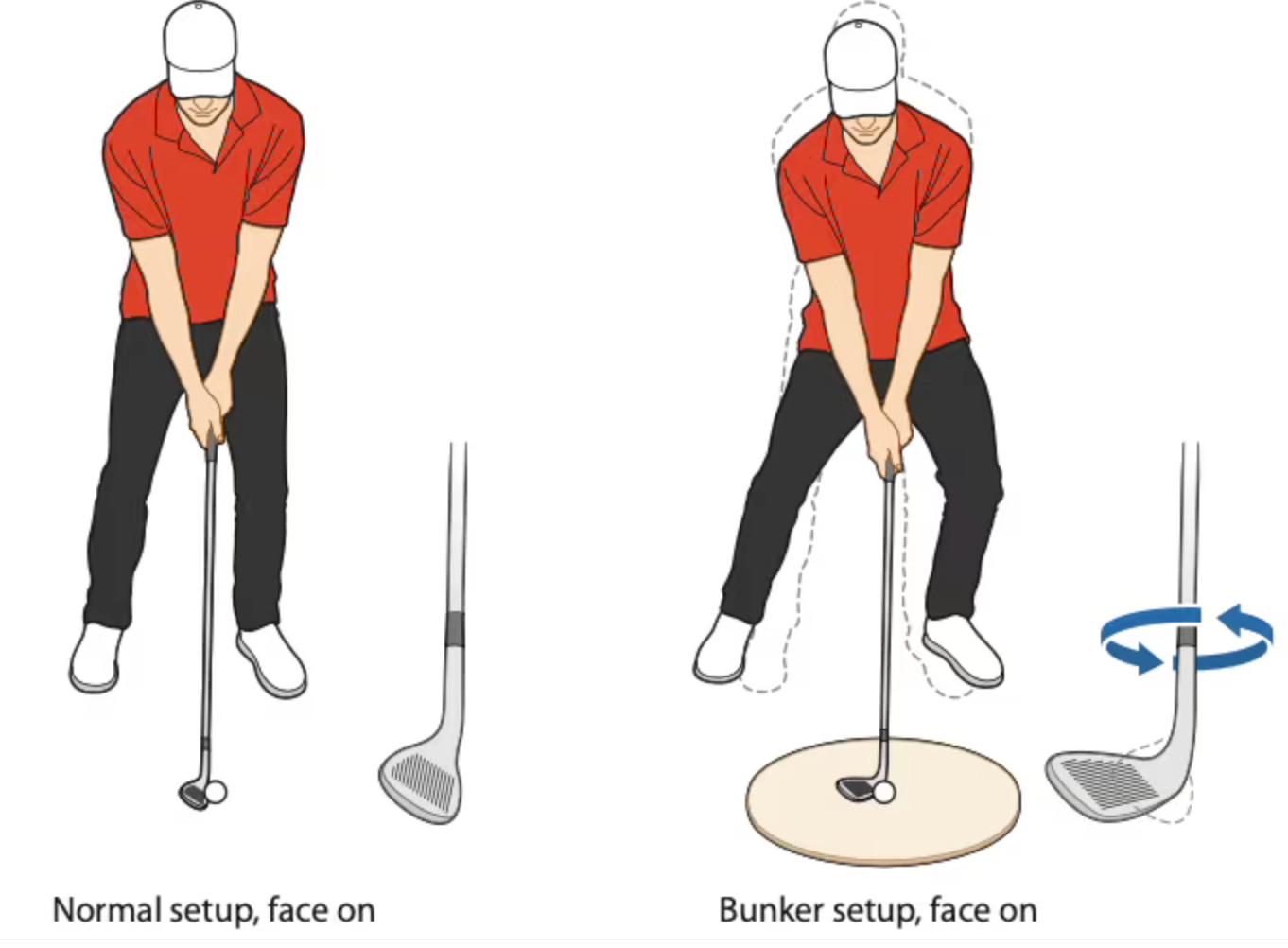
- Open the clubface first, then take your grip. The open face exposes the “bounce” on the sole of the wedge, which lets the club slide through the sand instead of digging in.
- Set your weight forward (around 60%) and dig your feet in slightly for a stable base — this also tells you how soft the sand is.
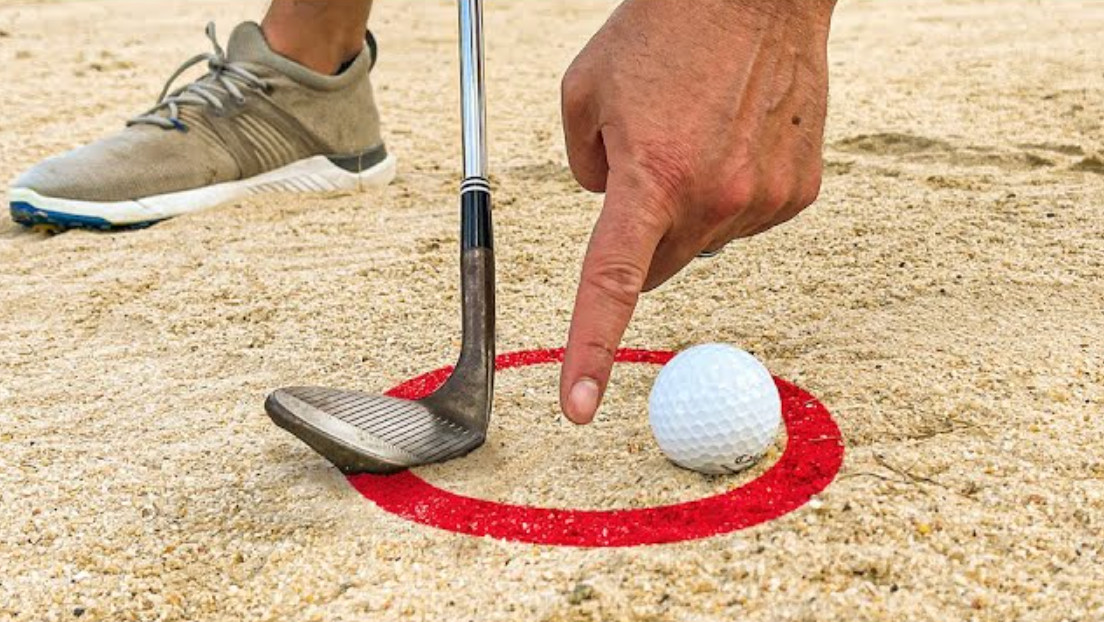
- Aim to enter the sand about two inches behind the ball. Pick a spot in the sand, not the ball, and focus on it.
- Make a full, committed, accelerating swing. A bunker shot needs roughly twice the swing length of a chip the same distance, because the sand absorbs most of the energy. Decelerating is the number-one cause of leaving it in the trap.
- Splash the sand and hold your finish. Let the loft and the sand do the work — the ball floats out high and soft.
The fairway bunker shot
Completely different priorities. Here you want to strike the ball first, before the sand. Grip down slightly, take one extra club, keep your lower body quiet and stay tall — the aim is clean, ball-first contact and getting safely back into play. Distance is a bonus; clearing the front lip is the job.
The plugged / buried lie
For a fried-egg lie, do the opposite of the splash shot: square or slightly close the face, play the ball back in your stance, and swing down steeply to dig the club under the ball. Expect it to come out low and run on landing — there is no spin to stop it, so plan for the release.
The long bunker shot
From 30–50 yards in a greenside bunker — the genuinely hardest shot in golf. Use less loft (a gap wedge or pitching wedge), open the face only a touch, enter the sand a little closer to the ball, and make a long, smooth, full swing. Trust the technique and accelerate through.

Best technique: avoid the bunkers with Shark Club
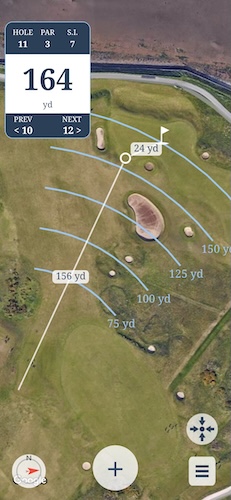
Every great bunker player will tell you the same thing: the best sand shot is the one you never have to play. You can spend years grooving a splash shot, or you can simply stop finding the sand in the first place — and that is a question of information, not talent.
This is exactly where Shark Club earns its place in your bag. Before you pull a club, the app gives you precise GPS distances to the front, middle and back of every green — and, crucially, the carry distances to clear or lay up short of the bunkers in your way. Match that number to your honest club distances and the right play becomes obvious: take on the carry only when you really can clear it, and lay up confidently when you can’t.
Shark Club runs on iPhone, Apple Watch, Android and Wear OS, with GPS distances, scorecards, Stableford scoring and handicap tracking. Want more reading? Try Types of Golf Courses Explained or The Four Golf Majors Compared. For help getting set up, visit the Shark Club Support & FAQ.
Share this article
Enjoyed the read? Pass it on to your golf friends.