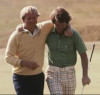
The Duel in the Sun — Watson v Nicklaus, 1977 (Turnberry)
Watson and Nicklaus, paired together all weekend, traded 65-66 against 65-66, finishing 11 and 10 shots clear of third place. Golf’s greatest head-to-head.
First played in 1860, The Open is the oldest championship in golf and the only major contested outside the United States. Here is the full story: the history, all ten links courses on the current rota, the iconic moments, the records, and exactly how a player earns a place in the field.
Outside the United Kingdom it is often called the British Open, but its proper name tells you everything about its standing: The Open Championship. When it began there was nothing else to distinguish it from. The winner is announced not as champion of a tournament but as the Champion Golfer of the Year, a title that has been handed out since before the invention of the telephone.
The Open is played every July on a rotating roster of ten links courses in Scotland, England and Northern Ireland, known as the “rota”. Links golf is the oldest form of the game: firm, fast, treeless coastal ground where the wind changes the course from hour to hour and the ball spends as much time running along the turf as flying through the air. It is the major where creativity beats power, and where the weather can matter as much as the field. In July 2026 the championship returns to Royal Birkdale for the 154th playing.
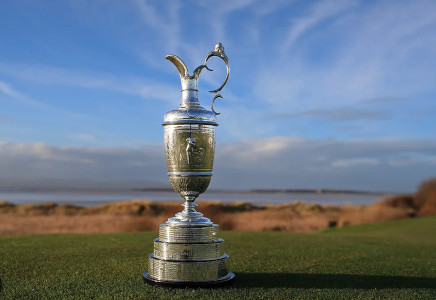
The first Open was played on 17 October 1860 at Prestwick in Ayrshire: eight professionals, three loops of Prestwick’s twelve holes in a single day, and a red morocco leather Challenge Belt for the winner, Willie Park Sr. When Young Tom Morris won the belt three years running (1868–70) he was allowed to keep it, and the championship paused for a year while a new prize was found. The replacement, first awarded in 1873, was the silver Claret Jug, still the trophy today and arguably the most romantic prize in sport.
The championship soon outgrew Prestwick, sharing hosting duties with St Andrews and Musselburgh before crossing into England for the first time in 1894 at Royal St George’s. The decades since map the history of the sport itself: the Great Triumvirate of Vardon, Taylor and Braid before the First World War; Hagen and Bobby Jones carrying it across the Atlantic; Arnold Palmer’s visits in the early 1960s convincing America’s best that the trip was worth making; and Royal Portrush taking the championship outside Great Britain for the first time in 1951, then again, gloriously, in 2019 and 2025.
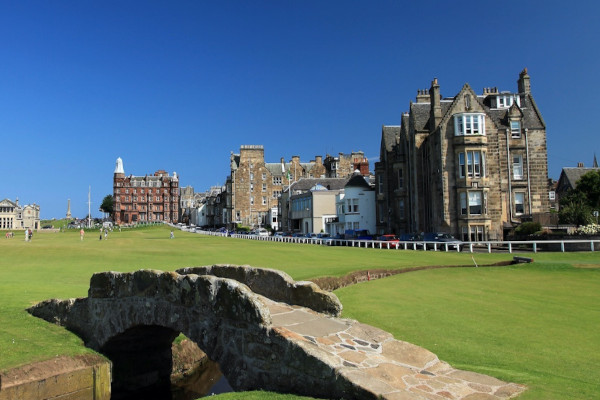
No course means more to The Open than the Old Course at St Andrews. Golf has been played on this strip of Fife linksland for some six centuries, and the Old Course has hosted the championship 30 times, more than any other venue, including the landmark 150th Open in 2022, won by Cameron Smith with a Sunday 64.
Its features are golf’s shared vocabulary: the vast double greens, the Road Hole 17th with its infamous pot bunker, Hell Bunker on the 14th, and the Swilcan Bridge on 18, where champions wave farewell. Wide fairways make it feel gentle on a calm day; put the pin behind a bunker and turn the wind, and it becomes a fiendish puzzle of angles that has been outsmarting golfers since the gutta-percha era.
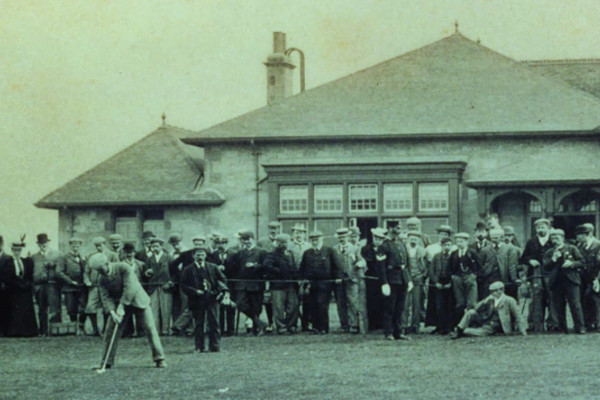
Muirfield is home to the Honourable Company of Edinburgh Golfers, the oldest golf club in the world, whose written rules of 1744 predate the founding of the United States. The course itself, laid out by Old Tom Morris in 1891, first hosted The Open in 1892 and has staged it 16 times, most recently Phil Mickelson’s masterful final-round 66 in 2013.
Players consistently rank it the fairest test on the rota. Its genius is the routing: an outer loop running clockwise and an inner loop running anti-clockwise, so the wind never comes from the same direction on consecutive holes and no stretch can be simply overpowered. Jack Nicklaus loved it so much that he named his own course in Ohio, Muirfield Village, after it.
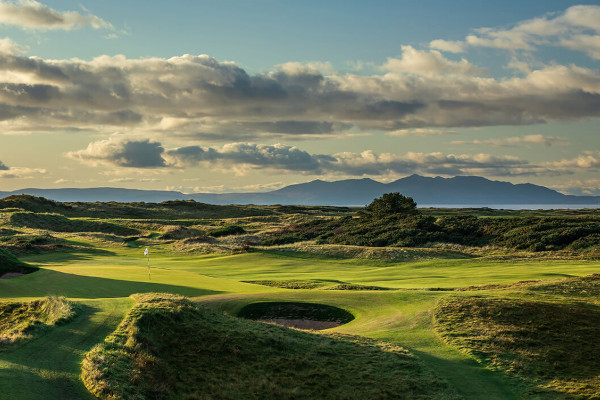
Royal Troon’s Old Course runs straight out along the Ayrshire coast and straight back, meaning nine holes downwind and nine holes into it, whichever way the weather leans. It first hosted The Open in 1923 and has now staged it 10 times, most recently in 2024, when Xander Schauffele closed with a 65 to win.
Its most famous hole is its shortest: the 8th, the “Postage Stamp”, a 123-yard par three to a sliver of green cut into a dune and ringed by cavernous bunkers. Gene Sarazen aced it aged 71; countless contenders have made five or worse. Troon also gave us one of the greatest finals ever played, when Henrik Stenson faced Phil Mickelson in 2016.
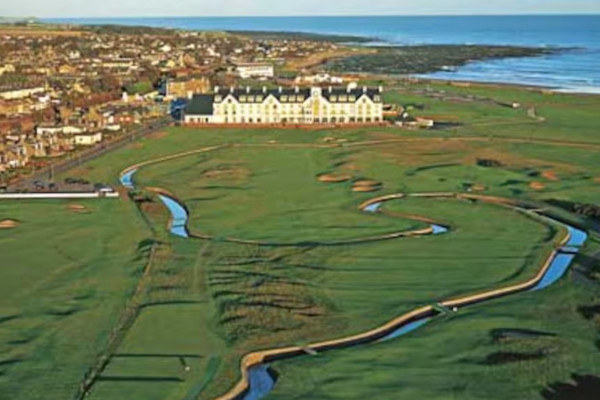
They call it “Car-nasty” for a reason. Carnoustie’s Championship Course is widely regarded as the hardest on the rota: long, exposed, and finishing with the most brutal closing stretch in championship golf, where the Barry Burn crosses the 17th and 18th fairways like a trap laid on purpose. It first hosted in 1931 and has staged 8 Opens, most recently Francesco Molinari’s flawless weekend in 2018.
Its history spans the sublime and the agonising: Ben Hogan’s only Open appearance and win in 1953, completing three majors in a single season, and Jean van de Velde’s unforgettable triple bogey from the burn on the 72nd hole in 1999.
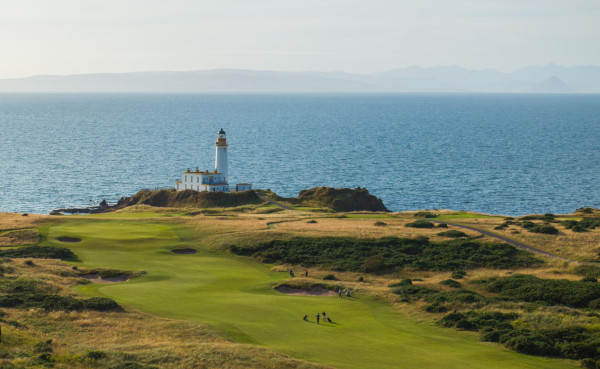
The most scenic course on the rota, Turnberry’s Ailsa course sweeps along the Ayrshire cliffs past its white lighthouse, with the granite dome of Ailsa Craig floating offshore. A latecomer that first hosted in 1977, it has packed more drama into four Opens than most venues manage in a dozen.
That 1977 debut produced the Duel in the Sun, Watson versus Nicklaus stride for stride over the weekend. Greg Norman won there in 1986, Nick Price in 1994, and in 2009 a 59-year-old Tom Watson came within an eight-foot putt of the most extraordinary win in the history of sport before Stewart Cink prevailed in a playoff. It has not hosted since. Although still regarded as one of the classic Open venues, it is not currently scheduled to return to the championship rota, though it remains on every golfer’s wish list.
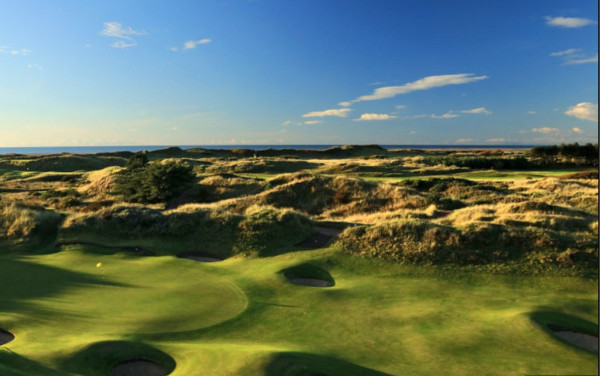
Royal Birkdale, on the Southport coast, is where The Open returns in July 2026 for the 154th championship. Many players call it the fairest links in England: the fairways run through flat valleys between towering dunes, so good shots are rarely thrown offline by capricious bounces, while the dunes create natural amphitheatres that make it one of the great spectator venues.
Since its first Open in 1954 it has crowned champions of the very highest class: Peter Thomson (twice), Arnold Palmer, Lee Trevino, Johnny Miller, Tom Watson and, most recently in 2017, Jordan Spieth, whose recovery from the practice ground on the 13th hole is already part of Open folklore. A plaque on the 16th still marks Palmer’s miraculous 6-iron from the buckthorn in 1961.
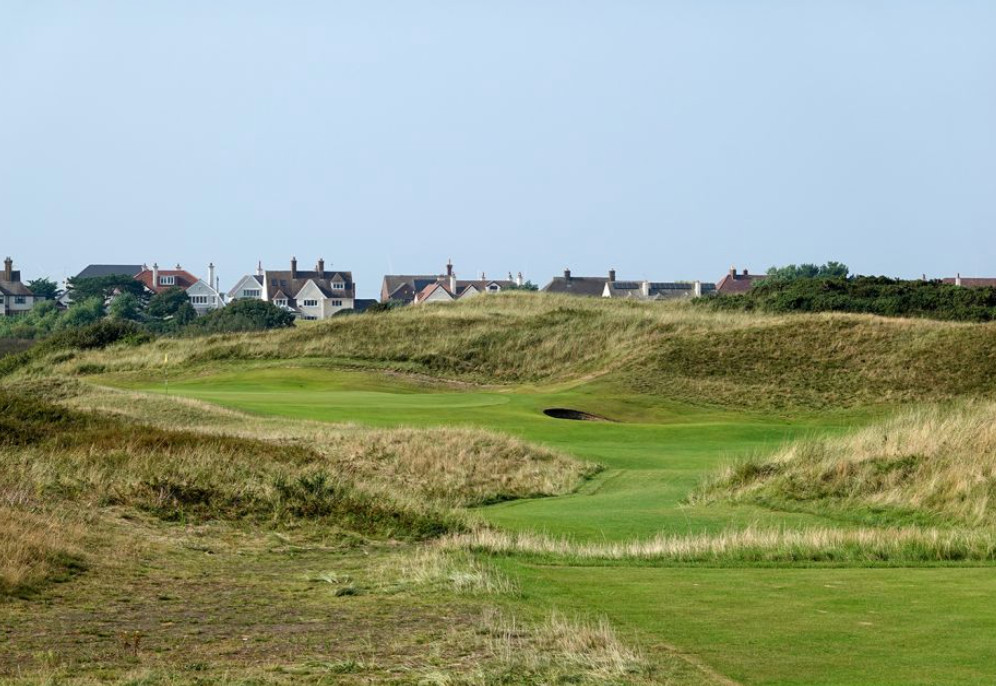
Founded in 1869, Royal Liverpool, universally known as Hoylake, is one of England’s oldest links and has hosted 13 Opens, most recently Brian Harman’s wire-to-wire win in 2023. Flatter than Birkdale and more subtle, its defences are firm turf, out-of-bounds lines that cut into the field of play, and wind off the Dee estuary.
Hoylake’s roll of honour is exceptional: Bobby Jones won here in 1930 on the way to his Grand Slam, and in 2006 Tiger Woods famously hit driver just once all week on the baked-out links, plotting his way to victory with irons just weeks after the death of his father, in one of the most emotional wins of his career.
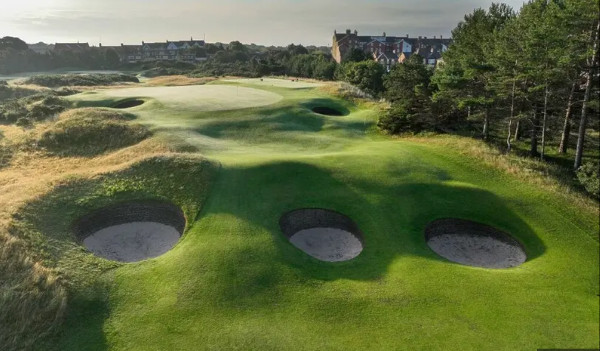
Royal Lytham is the rota’s great eccentric: a links a mile from the sea, surrounded by red-brick suburbia and a railway line, that opens with a par three, the only championship course in the world to do so. What it lacks in coastal views it makes up for in sand: more than 170 bunkers, placed exactly where you want to hit it.
It has hosted 11 Opens since Bobby Jones won the first in 1926. No one owned it like Seve Ballesteros, champion here in 1979, when he famously birdied the 16th from a temporary car park, and again in 1988 with a final-round 65 he called the best round of his life. Ernie Els won the most recent Lytham Open in 2012.
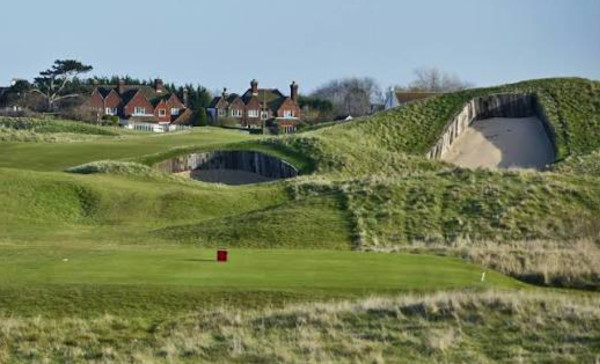
In 1894 Royal St George’s, on the Kent coast at Sandwich, became the first course outside Scotland to host The Open. It has now staged 15 championships, the most of any English venue, most recently Collin Morikawa’s win in 2021.
“Sandwich” is the wildest examination on the rota: heaving, rumpled fairways where flat lies barely exist, deep swales, and the tallest bunker in championship golf set into a dune on the 4th hole. Luck plays a bigger role here than anywhere else, which players either love or loathe. Its champions range from Harry Vardon to Walter Hagen to Sandy Lyle, along with Greg Norman’s 267 in 1993 and Darren Clarke’s emotional win in 2011.
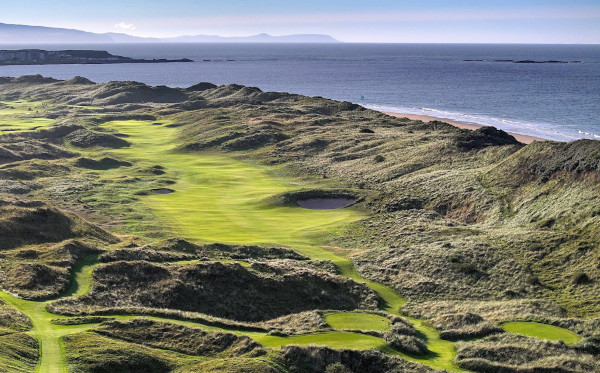
Royal Portrush’s Dunluce links is the only Open venue outside Great Britain. Max Faulkner won the first Portrush Open in 1951, and then the championship stayed away for 68 years. Its return in 2019 was one of golf’s great homecomings, and Ireland’s Shane Lowry turned it into a coronation, winning by six in front of delirious crowds.
The Open came back just six years later, with Scottie Scheffler lifting the Claret Jug in 2025. Set on cliffs overlooking the Atlantic near the ruins of Dunluce Castle, the course is best known for Calamity Corner, the 236-yard par-three 16th played across a yawning chasm. Miss right and the ball drops fifty feet.
The Open is inseparable from the ground it is played on. Links courses sit on the sandy, wind-scoured land that links the sea to the farmland behind, terrain too poor for crops but perfect for golf. If you want the full tour of course styles, see our guide to the types of golf courses; here is what matters at The Open.
A links with no wind is a different course from the same links in a three-club breeze. Tee times matter: half the field can draw a calm morning while the other half plays a gale, the famous “wrong side of the draw”. Champions flight the ball low, take more club and swing easier, and accept that even perfect shots will sometimes finish in imperfect places.
Firm, fast-running turf means drives can roll 80 yards and approach shots are judged on the bounce, not the carry. The best links players use the contours, running the ball through gaps and feeding it off slopes, and will happily putt from 30 yards off the green rather than risk a chip. If you have never watched an Open before, notice how often the professionals leave the driver in the bag: on ground this fast an iron still chases out plenty far, and it stays short of the bunkers placed exactly at driving distance.
Links bunkers are small, deep and often revetted with vertical sod walls. Unlike the shallow sand of a modern parkland course, they genuinely cost strokes: sometimes the only shot is sideways or even backwards. Our guide to golf bunkers covers the most feared examples, and several of them, like the Road Hole bunker, live on Open courses.
Open scoring swings wildly with the weather: Henrik Stenson finished twenty under par at Troon in 2016, while at Carnoustie in 1999 six over won. Links golf asks players to shoot the best score available on the day, not to chase a number printed on the card.
All ten current Open venues side by side. Swipe horizontally on a phone to see every column.
| Course | Location | First Open | Opens hosted | Latest champion | Known for |
|---|---|---|---|---|---|
| St Andrews (Old) | Fife, Scotland | 1873 | 30 | Cameron Smith, 2022 | Road Hole, double greens |
| Muirfield | East Lothian, Scotland | 1892 | 16 | Phil Mickelson, 2013 | Fairest test, two-loop routing |
| Royal St George’s | Kent, England | 1894 | 15 | Collin Morikawa, 2021 | Wild bounces, huge 4th-hole bunker |
| Royal Liverpool | Merseyside, England | 1897 | 13 | Brian Harman, 2023 | Internal out-of-bounds |
| Royal Troon | Ayrshire, Scotland | 1923 | 10 | Xander Schauffele, 2024 | The Postage Stamp 8th |
| Royal Lytham & St Annes | Lancashire, England | 1926 | 11 | Ernie Els, 2012 | 170+ bunkers, opens with a par 3 |
| Carnoustie | Angus, Scotland | 1931 | 8 | Francesco Molinari, 2018 | Hardest on the rota, Barry Burn |
| Royal Portrush (Dunluce) | Co. Antrim, Northern Ireland | 1951 | 3 | Scottie Scheffler, 2025 | Calamity Corner 16th |
| Royal Birkdale | Merseyside, England | 1954 | 11 (including 2026) | Jordan Spieth, 2017 | Dune valleys · 2026 host |
| Turnberry (Ailsa) | Ayrshire, Scotland | 1977 | 4 | Stewart Cink, 2009 | Lighthouse, Duel in the Sun |
Every venue sits on the coast, which is no accident: true links land only exists where sea meets sand. Five are in Scotland, four in England and one in Northern Ireland. Tap a marker or a name to jump to that course.
A century and a half of championships produces more folklore than any leaderboard can hold. Six moments every golf fan should know.
The Duel in the Sun — Watson v Nicklaus, 1977 (Turnberry)
Watson and Nicklaus, paired together all weekend, traded 65-66 against 65-66, finishing 11 and 10 shots clear of third place. Golf’s greatest head-to-head.
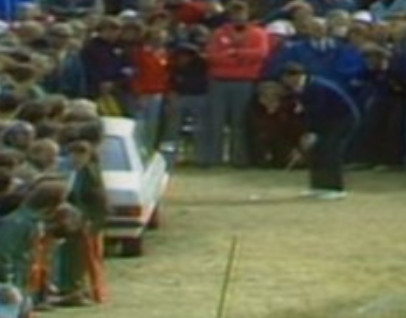
Seve’s Lytham — 1979 & 1988
In 1979 Ballesteros won from a temporary car park on the 16th; in 1988 he closed with a 65 he called the round of his life. No one played links golf with more imagination.
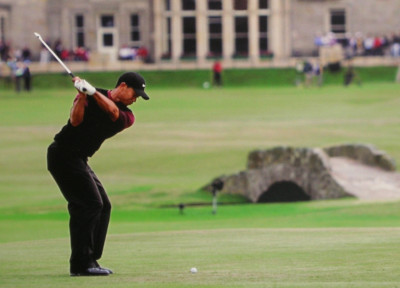
Tiger’s masterclass — 2000 (St Andrews)
Woods went 19 under without finding a single bunker all week, winning by eight and completing the career Grand Slam at 24, the youngest ever to do it.
Van de Velde’s 72nd hole — 1999 (Carnoustie)
Three ahead on the final tee, the Frenchman found rough, grandstand, burn and bunker on his way to a triple bogey, then lost the playoff. The Claret Jug is never won until the last putt drops.
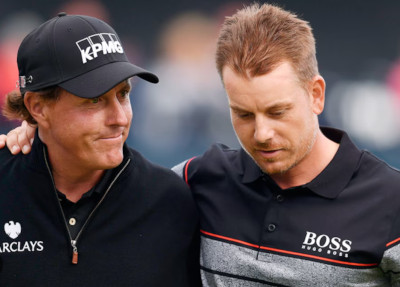
Stenson v Mickelson — 2016 (Royal Troon)
A modern Duel in the Sun. Stenson’s closing 63 beat Mickelson’s 65 head-to-head, setting the championship record of 264, twenty under par. Third place was eleven shots back.
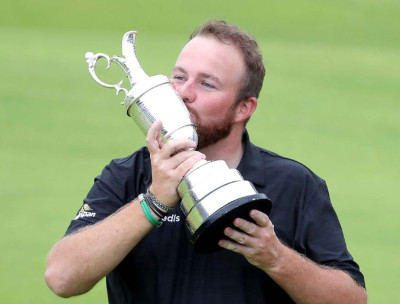
Lowry’s homecoming — 2019 (Royal Portrush)
In The Open’s first visit to the island of Ireland in 68 years, Ireland’s Shane Lowry won by six as the Portrush crowds sang him up the 18th in the rain.
The winner of The Open is announced as the Champion Golfer of the Year, a title first bestowed in 1860. The record books read like the history of golf itself.
Vardon won in 1896, 1898, 1899, 1903, 1911 and 1914. Behind him on five are J.H. Taylor, James Braid, Peter Thomson and Tom Watson. Four eras, one championship.
Young Tom won the 1868 Open aged 17, then won the next three as well. His father, Old Tom Morris, remains the oldest champion, winning in 1867 at 46.
Stenson’s 20-under 264 at Troon in 2016 is the lowest aggregate in major championship history at the time, sealed with a final-round 63 under the fiercest pressure.
At 59, needing par at the last at Turnberry to win a sixth Open, Watson bogeyed and lost the playoff to Stewart Cink. The greatest near-miss in the championship’s history.
Part of The Open’s romance is in its name: it is genuinely open. Around 156 players tee it up each July, and while most arrive through exemptions, there is a route into the field for any professional, and any amateur with a low enough handicap, willing to earn it. These are the four main roads to the first tee.
The majority of the field qualifies automatically. The exempt categories include past Open champions (up to age 55), the leading finishers from the previous year’s Open, recent winners of the other three majors, the top players in the Official World Golf Ranking, and leading performers on the DP World Tour, PGA Tour and other major circuits. Winners of the game’s biggest amateur titles, The Amateur Championship and the U.S. Amateur among them, also earn a place, provided they remain amateurs.
The R&A designates a series of tournaments across the global calendar, in Australia, South Africa, Japan, Singapore, the United States and Europe, as Open Qualifying Series events. Finish high enough in one of them without already being exempt, and you have booked your trip. It is how in-form players from every tour fight their way in.
Every June, more than a dozen courses around the UK and Ireland host 18-hole Regional Qualifying. Entry is open to any professional and to any amateur with a handicap index of 0.4 or better. Club pros, mini-tour grinders and elite amateurs all tee it up together; the leading players advance to Final Qualifying.
In early July, four links courses each stage 36 holes in a single day, with a handful of Open places, around five per venue, going to the top finishers. It is nicknamed “the longest day in golf”: one round to get in position, one round to hold your nerve, and a career-changing prize for those who do. Every year it produces at least one unknown name who ends up playing alongside the world’s best on Thursday morning.
You may never play Final Qualifying, but links thinking will save you shots on any course, in any country.

Several Open venues are already mapped in Shark Club, with GPS distances measured from where your ball actually lies: St Andrews Old, Royal Troon, Carnoustie, Turnberry, Royal Liverpool, Royal Birkdale and Royal Portrush. If you are ever lucky enough to play one, bring the app; if not, it works just as well at your home club.
More reading: The Four Golf Majors Compared puts The Open alongside the Masters, PGA and U.S. Open; our bunkers guide covers the pot bunkers that define links golf; and the Support & FAQ explains scorecards, Stableford scoring and GPS features on iPhone, Apple Watch, Android and Wear OS.
Enjoyed the read? Pass it on to your golf friends.